Bad breath can be more than an occasional problem after eating garlic, onions or spicy food. If unpleasant breath continues even after brushing your teeth, it may be linked to plaque, tartar, gum disease, tooth decay, dry mouth or other oral-health problems.
The good news is that bad breath is often manageable once its underlying cause is identified. Maintaining good oral hygiene, cleaning the tongue and between the teeth, staying hydrated and receiving regular dental care can all help. Persistent bad breath, however, should not simply be covered up with mints or mouthwash.
In this guide, Smile Center Dental Clinic Islamabad explains the common bad breath causes and treatment options, how to get rid of persistent bad breath and when it is time to see a dentist.
What is Bad Breath?
Bad breath, medically known as halitosis, refers to an unpleasant or unusual odour coming from the mouth.
Everyone can experience temporary bad breath, particularly after eating strong-smelling foods or waking up in the morning. However, persistent or recurrent bad breath may indicate an underlying oral-health problem that requires professional attention.
In many cases, the source is within the mouth. Bacteria can accumulate on the tongue, around the teeth and along the gum line, producing compounds that contribute to unpleasant odours.
If your breath remains unpleasant despite maintaining good oral hygiene, a dental examination can help determine the underlying cause.
What Causes Bad Breath?
There is no single cause of bad breath. Several oral and lifestyle factors can contribute to the problem.
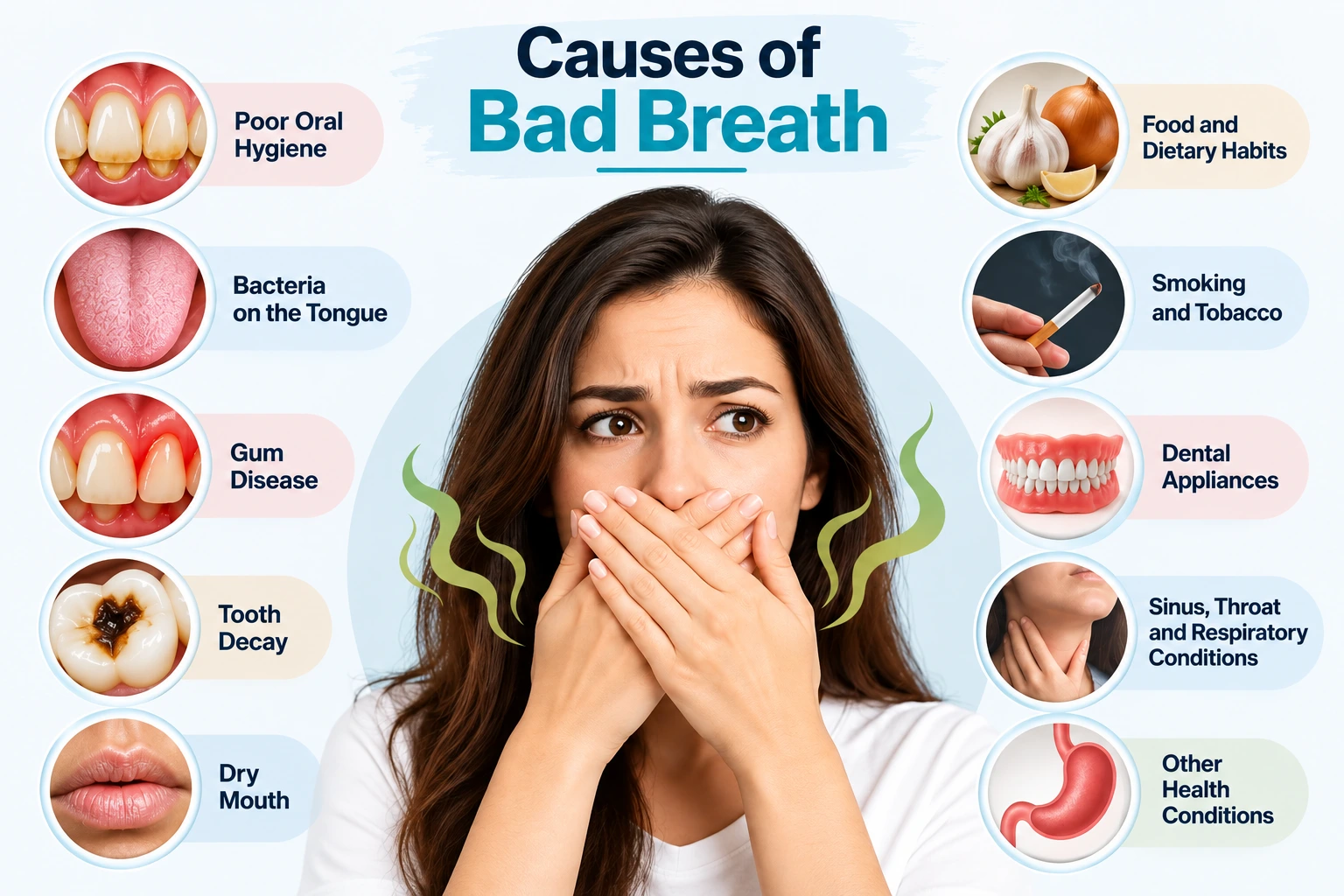
1. Poor Oral Hygiene
One of the most common causes is inadequate oral hygiene. When teeth are not cleaned properly, food particles and plaque can accumulate around the teeth and gums. Oral bacteria break down these materials and can produce unpleasant-smelling compounds.
Brushing twice a day, cleaning between the teeth and cleaning the tongue are important parts of daily oral care.
2. Bacteria on the Tongue
The tongue has a naturally uneven surface that can trap bacteria and food particles. The back portion of the tongue can be particularly difficult to clean and may contribute to persistent mouth odour. Gently cleaning the tongue once a day can help reduce bacterial build-up.
3. Plaque and Tartar
Plaque is a sticky layer of bacteria that develops on teeth. If it is not removed effectively, it can harden into tartar or calculus. Tartar cannot normally be removed effectively with a regular toothbrush and may contribute to gum irritation, plaque accumulation and bad breath.
Professional scaling and polishing can remove hardened deposits and certain surface stains. Smile Centre’s detailed guide explains the procedure and its relationship with oral hygiene and bad breath.
4. Gum Disease
Gingivitis and more advanced gum disease can contribute to persistent bad breath.
Plaque and tartar around the gum line can irritate the gums. As gum disease progresses, deeper areas around the teeth can become difficult to clean and may harbour odour-producing bacteria. If bad breath is accompanied by bleeding, swollen or tender gums, a dental examination is particularly important.
5. Tooth Decay
Cavities and damaged teeth can trap food and bacteria, potentially contributing to unpleasant breath. If you also experience toothache, sensitivity, visible holes or swelling, don't rely solely on breath fresheners. The underlying dental problem needs to be assessed and treated.
6. Dry Mouth
Saliva naturally helps wash away food particles and bacteria from the mouth. When saliva production decreases, bacteria and debris can accumulate more easily. Dry mouth can therefore contribute to bad breath. Certain medications, smoking and other factors may contribute to oral dryness. Drinking enough water and discussing persistent dry mouth with a healthcare professional can help address the problem.
7. Food and Dietary Habits
Garlic, onions and certain strongly flavoured foods can temporarily affect the smell of your breath. Fasting or crash dieting can also contribute to bad breath in some people. Temporary food-related breath usually improves as the food is cleared from the body. Persistent bad breath requires a different approach.
8. Smoking and Tobacco Use
Smoking and tobacco products can contribute to unpleasant breath and are also associated with increased oral-health risks. Tobacco can contribute to dry mouth and may increase the risk of gum disease, both of which can contribute to bad breath.
9. Dental Appliances and Dentures
Dentures, retainers, braces and other oral appliances can collect food particles and bacteria if they are not cleaned properly. People who wear dentures should follow their dentist's cleaning instructions and maintain regular dental check-ups.
10. Other Health Conditions
Although many cases of bad breath originate in the mouth, some non-dental conditions can affect breath odour. These may include dry mouth, certain infections, acid reflux and other medical conditions. If a dental examination does not identify an oral cause, your dentist may recommend evaluation by another healthcare professional.
Why Do I Have Bad Breath Even After Brushing?
This is one of the most common questions people have about persistent bad breath. If your breath still smells bad after brushing, brushing alone may not be addressing the underlying cause.
Possible reasons include:
- Bacteria on the back of the tongue
- Plaque between the teeth
- Tartar build-up
- Gum disease
- Tooth decay
- Dry mouth
- Food trapped around teeth
- Poorly cleaned dentures or dental appliances
- Certain health conditions
Brushing cleans the tooth surfaces, but effective oral hygiene also involves cleaning between the teeth and the tongue. If the problem continues despite good daily oral care, consider scheduling a dental examination rather than repeatedly masking the odour.
How to Get Rid of Bad Breath?
The most effective approach depends on what is causing the bad breath.
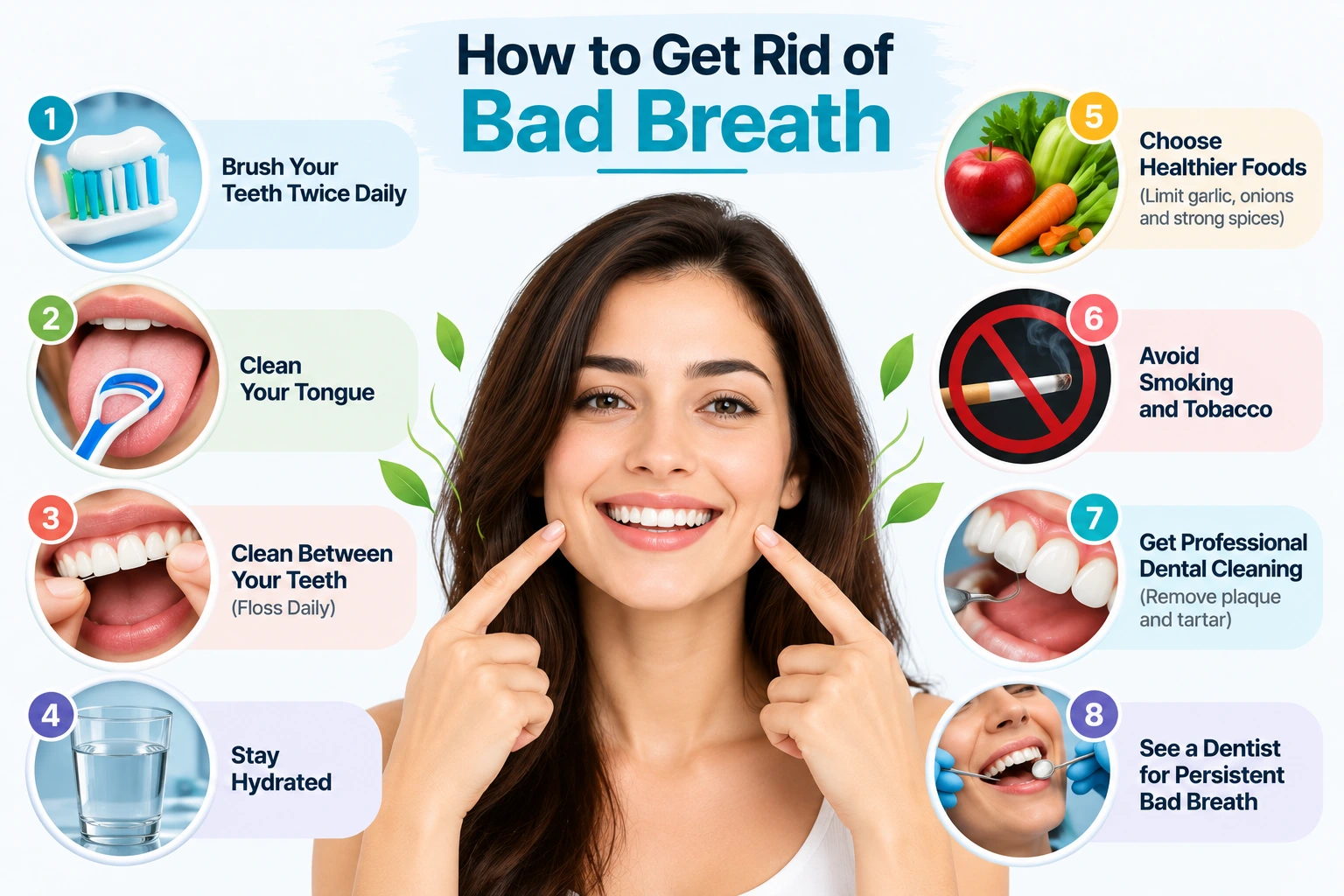
1. Brush Your Teeth Twice a Day
- Brush your teeth gently for approximately two minutes using fluoride toothpaste.
- Pay attention to the gum line and hard-to-reach areas without brushing aggressively.
2. Clean Your Tongue
- The tongue can collect bacteria and food particles, particularly toward the back.
- Use your toothbrush or a tongue cleaner gently once a day.
3. Clean Between Your Teeth
- Food and plaque can remain between teeth even after brushing.
- Use dental floss or an appropriate interdental cleaning device daily.
4. Drink Enough Water
- Staying hydrated can help when dry mouth contributes to unpleasant breath.
- If you regularly experience significant dry mouth, discuss it with your dentist or healthcare professional.
5. Avoid Tobacco
Stopping smoking and other tobacco use can benefit both breath freshness and overall oral health.
6. Maintain Regular Dental Check-ups
Regular dental examinations allow your dentist to identify problems such as cavities, gum disease, plaque and tartar before they become more complicated.
Can Scaling and Polishing Help With Bad Breath?
Yes, professional dental cleaning can help when bad breath is associated with plaque, tartar or deposits in the mouth.
Scaling removes hardened tartar that cannot normally be removed through routine brushing. Polishing can help remove certain surface stains and remaining deposits. However, scaling and polishing is not a universal cure for every case of bad breath. Persistent odour may have other causes, including gum disease, tooth decay, dry mouth or certain medical conditions.
If you have persistent bad breath together with visible tartar, bleeding gums or a rough build-up around the gum line, a professional dental examination and cleaning may be appropriate.
Does Mouthwash Cure Bad Breath?
Mouthwash can be useful as part of an oral hygiene routine, but it should not automatically be considered a cure for persistent bad breath.
Some mouth rinses are designed to temporarily mask odour, while therapeutic mouth rinses containing specific active ingredients may help control odour-causing bacteria or compounds. The American Dental Association notes that cosmetic mouth rinses may temporarily mask bad breath, while certain therapeutic formulations can provide longer-term control.
Importantly, mouthwash does not replace brushing and cleaning between the teeth. If bad breath continues despite good oral hygiene, identifying and treating the underlying cause is more important than simply masking the odour.
When Should You See a Dentist for Bad Breath?
You should consider seeing a dentist if your bad breath:
- Continues despite good oral hygiene
- Keeps returning
- Is accompanied by bleeding gums
- Occurs with swollen or painful gums
- Is accompanied by toothache
- Occurs with loose adult teeth
- Is associated with significant tartar build-up
- Comes with a persistent bad taste
- Does not improve after making appropriate lifestyle and oral-hygiene changes
A dentist can examine your teeth, gums and tongue and determine whether the source appears to be dental. If an oral cause is not identified, further medical assessment may be appropriate.
Bad Breath Treatment in Islamabad
If you are experiencing persistent bad breath, the first step should be identifying why it is happening.
At Smile Center Dental Clinic Islamabad, a dental examination can help assess common oral causes such as plaque and tartar build-up, gum problems, tooth decay and other dental conditions.
Depending on the findings, your dentist may recommend professional cleaning, treatment for gum disease, restorative dental treatment or other appropriate care. Rather than continuously relying on mints or breath fresheners, professional evaluation can help you address the underlying problem.
Looking for a Dentist for Bad Breath in Islamabad?
If persistent bad breath is affecting your confidence or continues despite regular brushing and flossing, schedule a dental consultation at Smile Center Dental Clinic Islamabad.
Book your consultation and get your oral health assessed by a dental professional.
Frequently Asked Questions
What is the main cause of bad breath?
Many cases of bad breath originate in the mouth and can be associated with bacteria, plaque, tongue coating, gum disease, tooth decay, food debris or dry mouth. The exact cause varies from person to person.
How can I get rid of bad breath permanently?
There is no single permanent solution because treatment depends on the cause. Maintaining good oral hygiene, cleaning between the teeth and tongue, staying hydrated and treating underlying dental problems can help. Persistent cases should be assessed by a dentist.
Why does my breath smell bad even after brushing?
Brushing alone may not remove bacteria from the tongue, plaque between the teeth or tartar around the gum line. Gum disease, tooth decay and dry mouth can also contribute to persistent odour.
Can scaling and polishing remove bad breath?
Professional scaling and polishing can help when plaque, tartar and oral deposits are contributing to bad breath. However, it may not resolve bad breath caused by other dental or medical conditions.
Is bad breath a sign of gum disease?
It can be. Gum disease can contribute to persistent bad breath, particularly when plaque and tartar accumulate around the gums. Other symptoms can include bleeding, swelling or tenderness.
Is mouthwash enough to treat bad breath?
Mouthwash can help control or temporarily mask odour depending on its formulation, but it should not replace brushing, interdental cleaning or professional dental care.
When should I see a dentist for bad breath?
If bad breath persists despite good oral hygiene, or if you have bleeding or swollen gums, toothache, loose teeth or other oral symptoms, arrange a dental examination.
Get Fresher Breath with the Right Dental Care
Persistent bad breath can often be improved by identifying and treating its underlying cause. If brushing and flossing are not resolving the problem, a professional dental check-up can help determine whether plaque, tartar, gum disease, tooth decay or another issue is contributing to the odour.
For expert bad breath treatment in Islamabad, consult Smile Center Dental Clinic and take the first step toward fresher breath and better oral health.